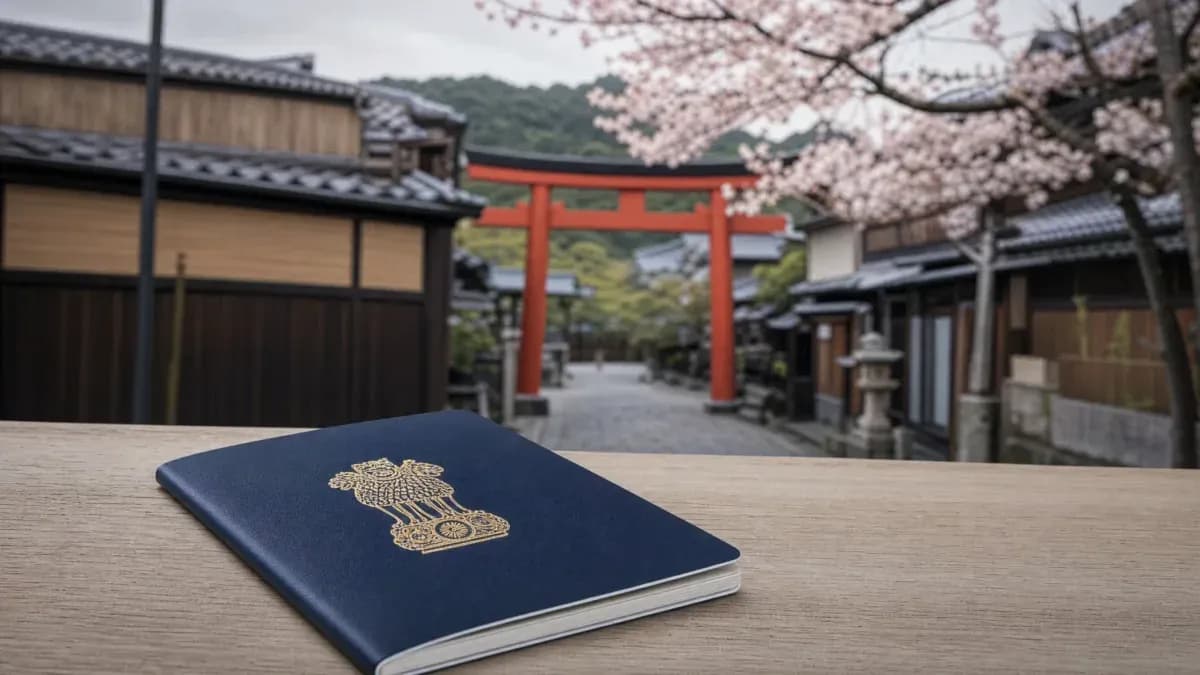
Indian passport holders need a visa for Japan. There is no visa on arrival and no visa-free entry, so this has to be sorted before you fly. The good news is the price: Japan raised its standard tourist visa fee five-fold on 1 July 2026, from ¥3,000 to ¥15,000, and Indians were left out of the increase. You still pay ₹500.
What it costs from India#
Item | Amount |
|---|---|
Single-entry visa, Indian passport | ₹500 |
Multiple-entry visa, Indian passport | ₹500 |
Same visa for most other nationalities from 1 July 2026 | ¥15,000 / ¥30,000 |
VFS Global service charge | extra, payable separately |
The ₹500 figure comes from a long-standing bilateral arrangement between India and Japan, which the Embassy of Japan in India confirmed still applies after the global fee revision. It makes Japan one of the cheapest visas an Indian traveller can apply for — cheaper than Vietnam, cheaper than Thailand's tourist visa, cheaper than the UAE.
Budget for the VFS service charge on top. That fee is set by the outsourcing partner, not the embassy, and it is where most of your actual spend goes.
Two routes: eVisa or sticker visa#
Since 1 April 2024 Japan has offered an eVisa to Indian applicants, alongside the traditional passport sticker.
eVisa — single entry, short-term tourism, stay up to 90 days. Applied for online, no passport submission, and you arrive with a digital visa shown on your phone. Eligibility is narrower than the sticker route: it is meant for ordinary-passport tourists resident in India who are applying for themselves.
Sticker visa through VFS Global — the route for everything the eVisa does not cover: multiple entry, business, visiting relatives, longer stays, and applicants the eVisa system rejects.
If you qualify for the eVisa, take it. It removes the courier step and the week your passport spends out of your hands.
Documents#
Japan's list is short by the standards of this region, but it is checked strictly:
- Passport valid for the trip, with blank pages
- Visa application form, completed and signed
- One recent photograph to specification
- Flight booking and day-by-day itinerary
- Proof of accommodation for every night
- Bank statements for the last six months, plus income tax returns
- Employment or business proof
The itinerary matters more for Japan than for most destinations. A vague "Tokyo, Kyoto, Osaka" is weaker than dated entries with the hotels attached. Consulates read it as evidence you are a tourist with a plan and a reason to come home.
Timeline#
Standard processing is quoted at four to five working days once the consulate has the file, and longer in peak season — cherry blossom in late March and April, and autumn colour in November, are the crunch periods. Apply four to six weeks before departure and you will not be watching the tracker.
Applications are handled by the Embassy of Japan in New Delhi and the Consulates-General in Mumbai, Chennai, Bengaluru and Kolkata, through VFS Global centres, by jurisdiction of your residence. You cannot pick the office; it follows your address.
What Japan does not require#
No visa on arrival, and no ETA scheme. If a site offers you a "Japan visa on arrival for Indians", it is describing something that does not exist.
There is also no travel insurance mandate for a tourist visa, unlike Schengen. Buy it anyway — Japanese medical costs are among the highest in the world.
Which route is yours#
Your trip | Route | Fee |
|---|---|---|
Solo or family holiday, under 90 days, applying for yourself | eVisa | ₹500 + VFS charge |
Multiple entries, business, visiting family | Sticker visa via VFS | ₹500 + VFS charge |
Transit only, leaving the airport | Visa still required | ₹500 + VFS charge |
Rules verified on 25 July 2026. Confirm fees and eligibility on the Embassy of Japan's own pages before you apply — the global fee schedule changed this month and third-party sites are still catching up.